STEM: A Matter of the Heart
Eine Herzenssache
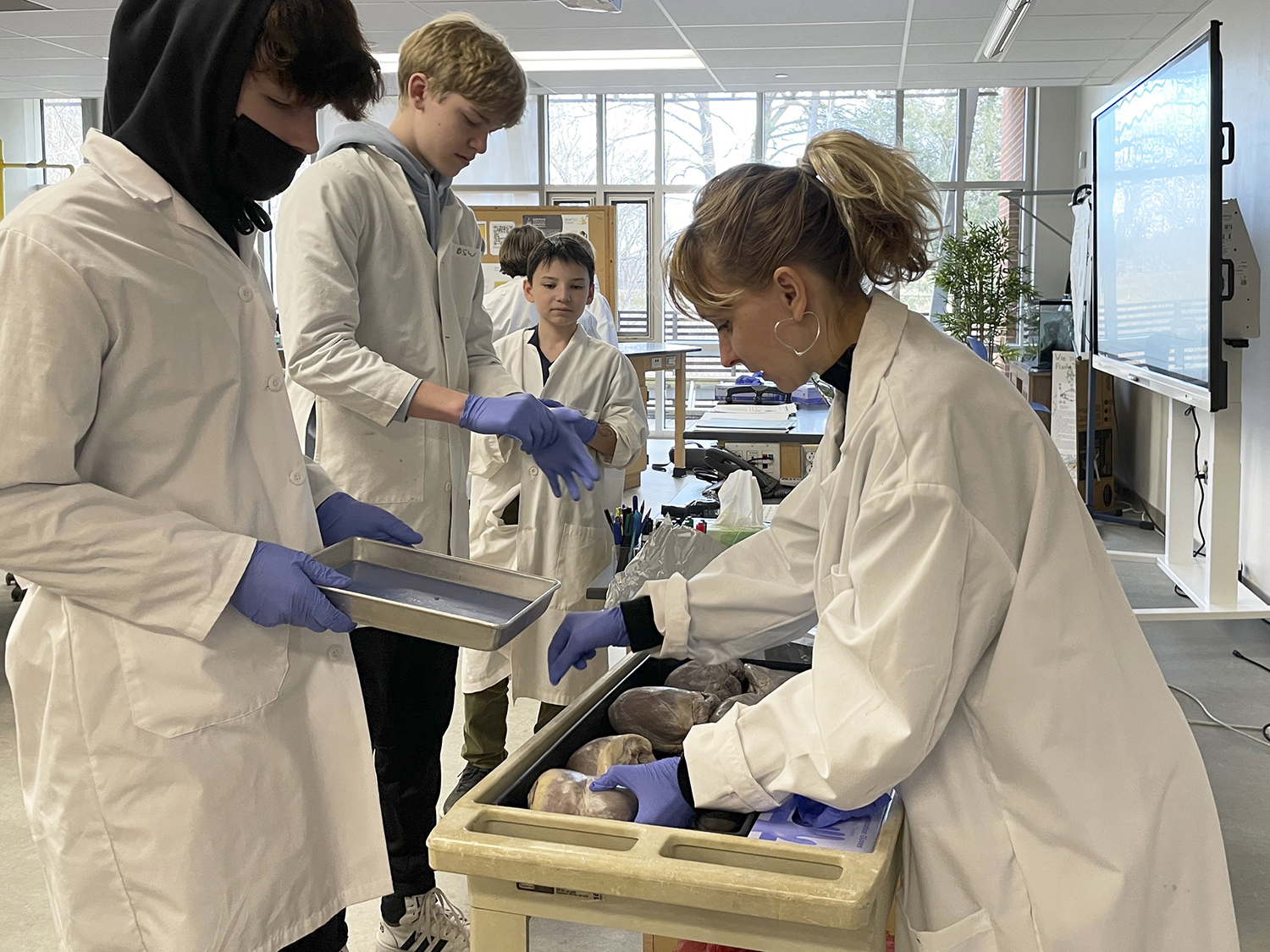
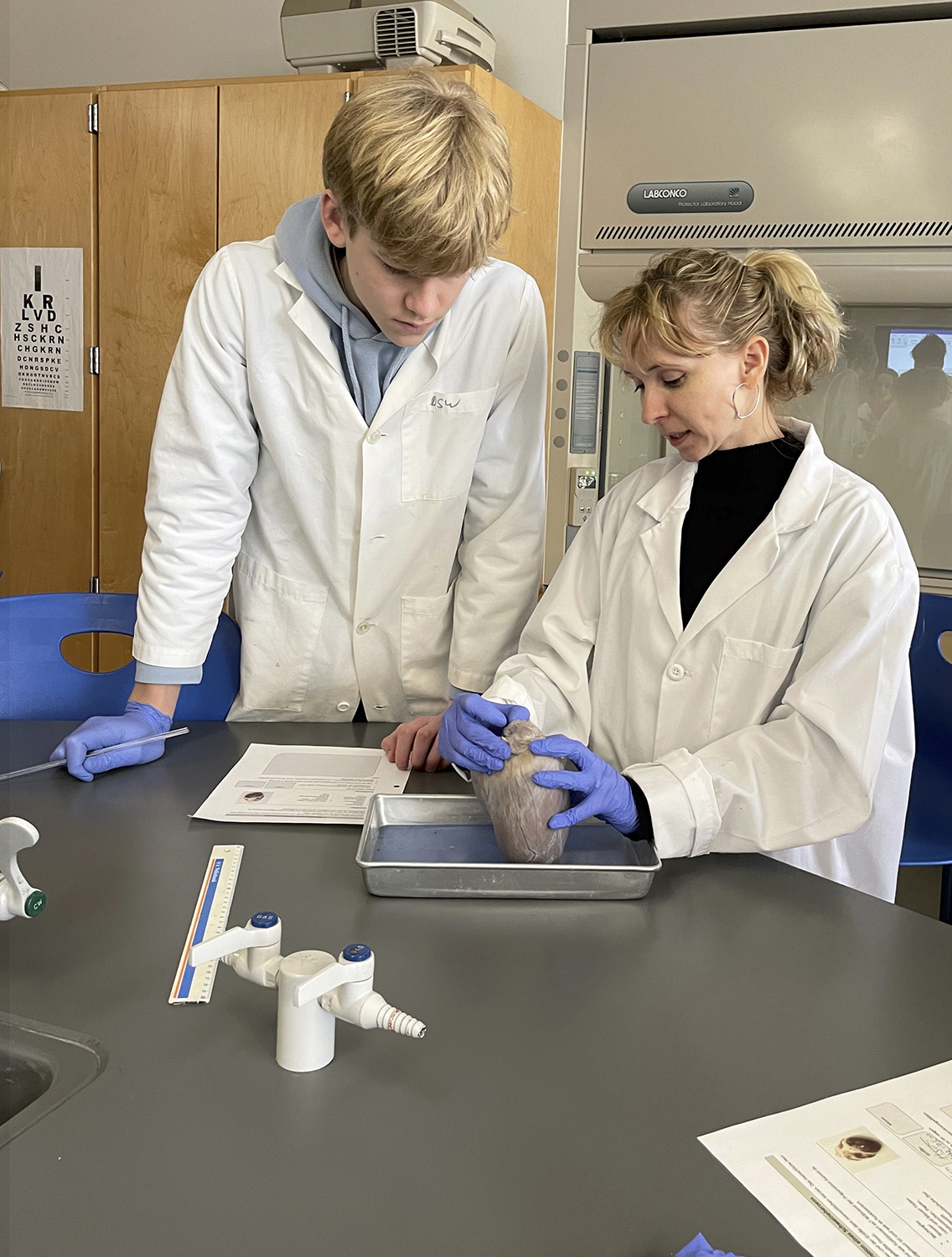
Since the beginning of the second semester, the 8th graders at GISW have been studying the topic "Heart and Blood Circulation". After learning a lot about the human heart, it was time to take a look at real hearts. These were of course not from humans, but from pigs and cows. We were very excited. First, our biology teacher, Mrs. Bankert, explained to us what we would have to pay attention to when dissecting hearts. After building small teams, each group received a heart.
In the first lesson, the hearts were examined, measured and analyzed from the outside. Than we threaded thin glass rods through the blood vessels and tried to identify the individual components of the heart.
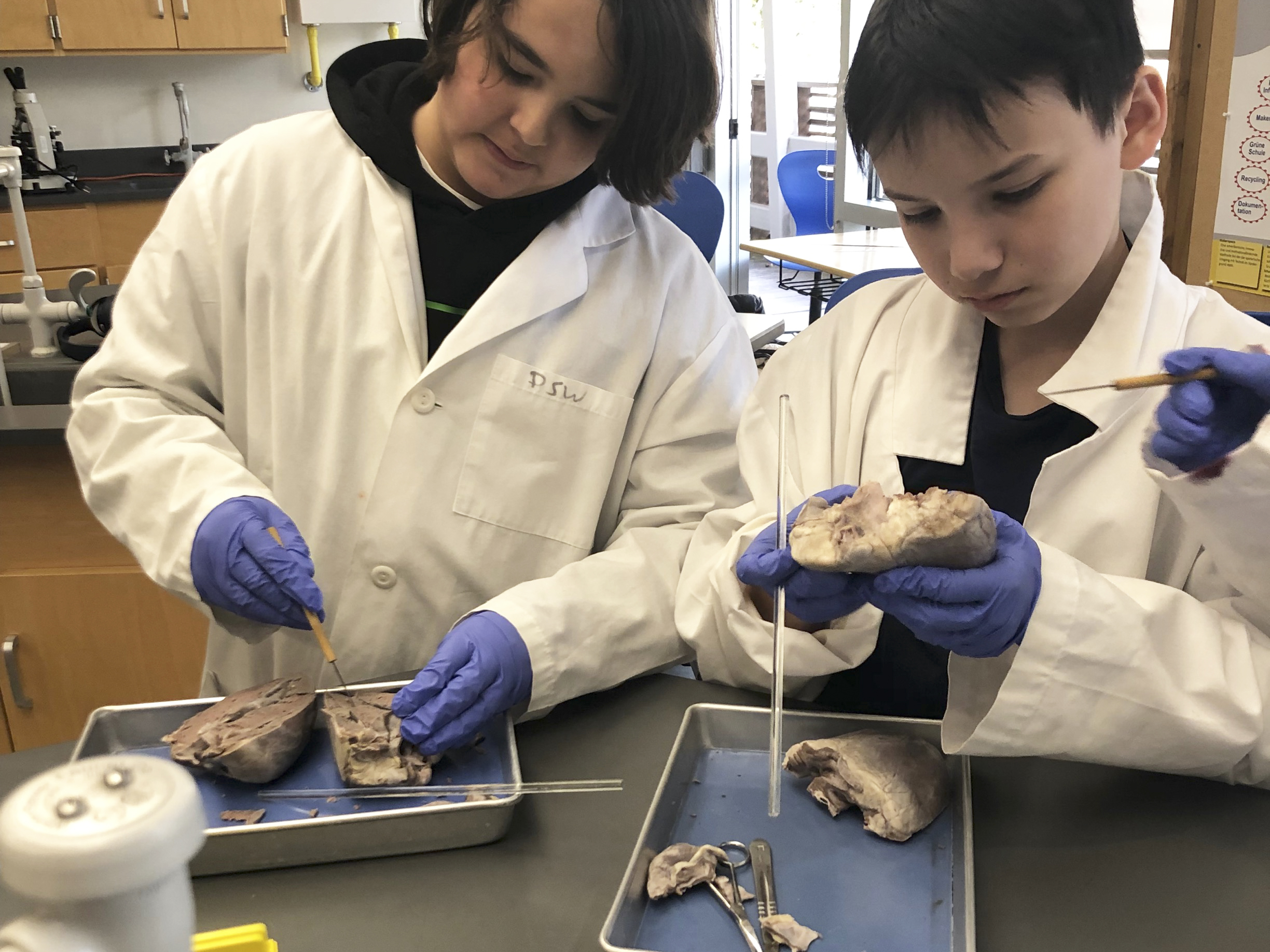
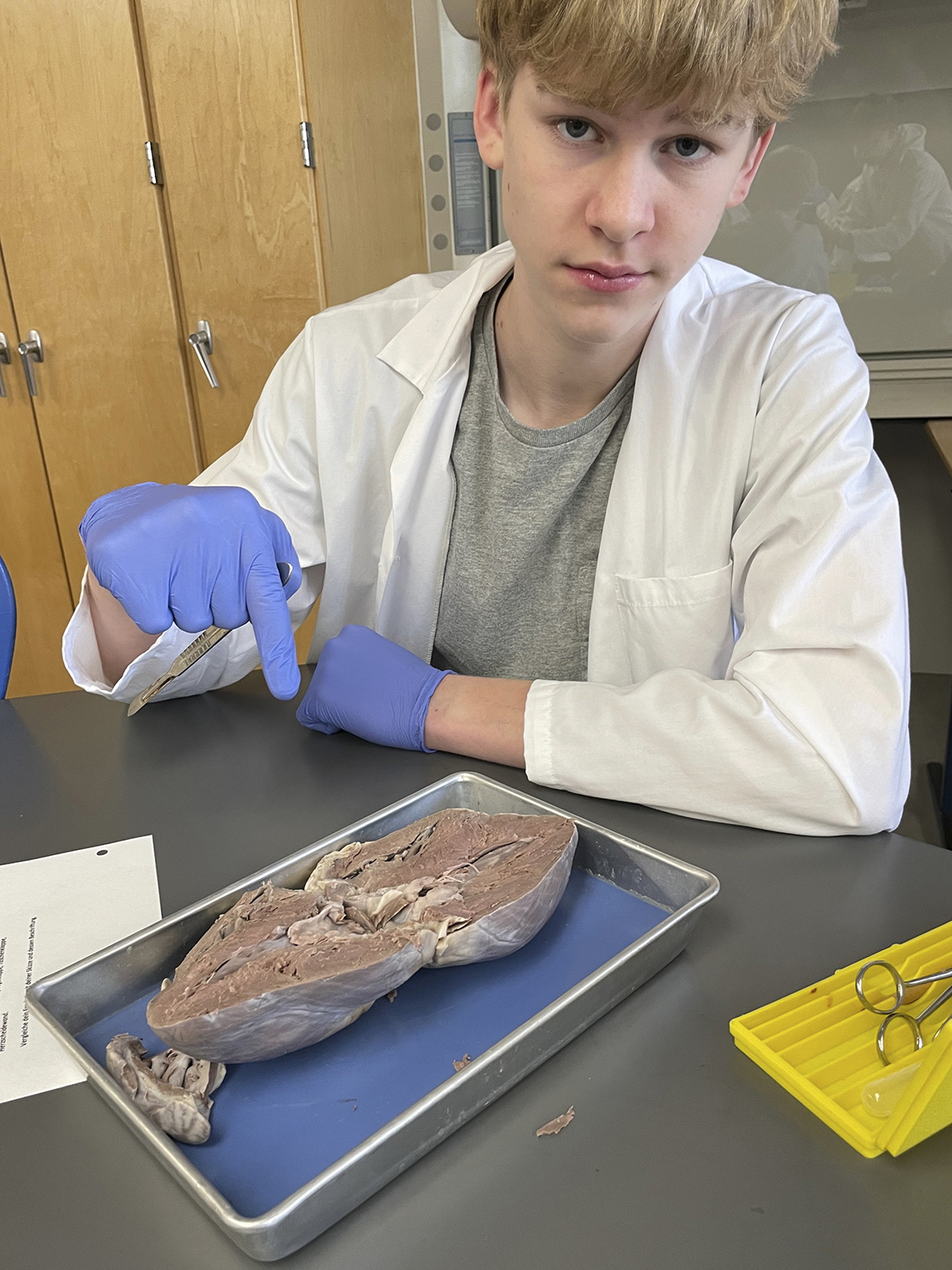
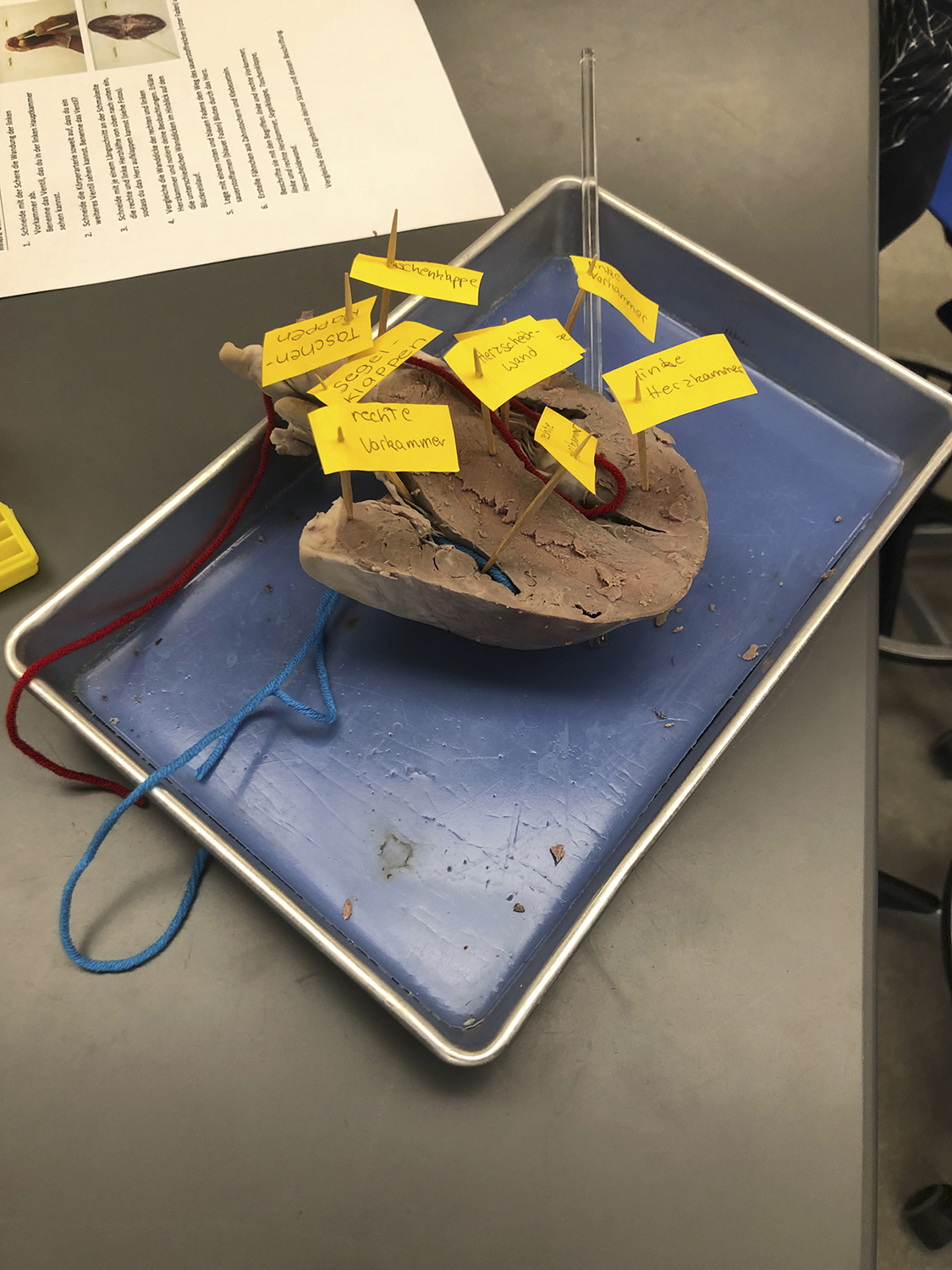
The second lesson focused on the inside of the heart. We cut the hearts in half with a scalpel. It may sound a bit grim but it is the only way to get a close look at the inside of the heart. It was very exciting to see the different parts and areas of the heart such as the aorta and veins (blood vessels). We were amazed at the thickness of the actual heart muscle. After identifying all parts, we labeled them with small flags and marked the path of blood flow with colored threads, using red thread for oxygen-rich blood and blue for oxygen-poor blood.
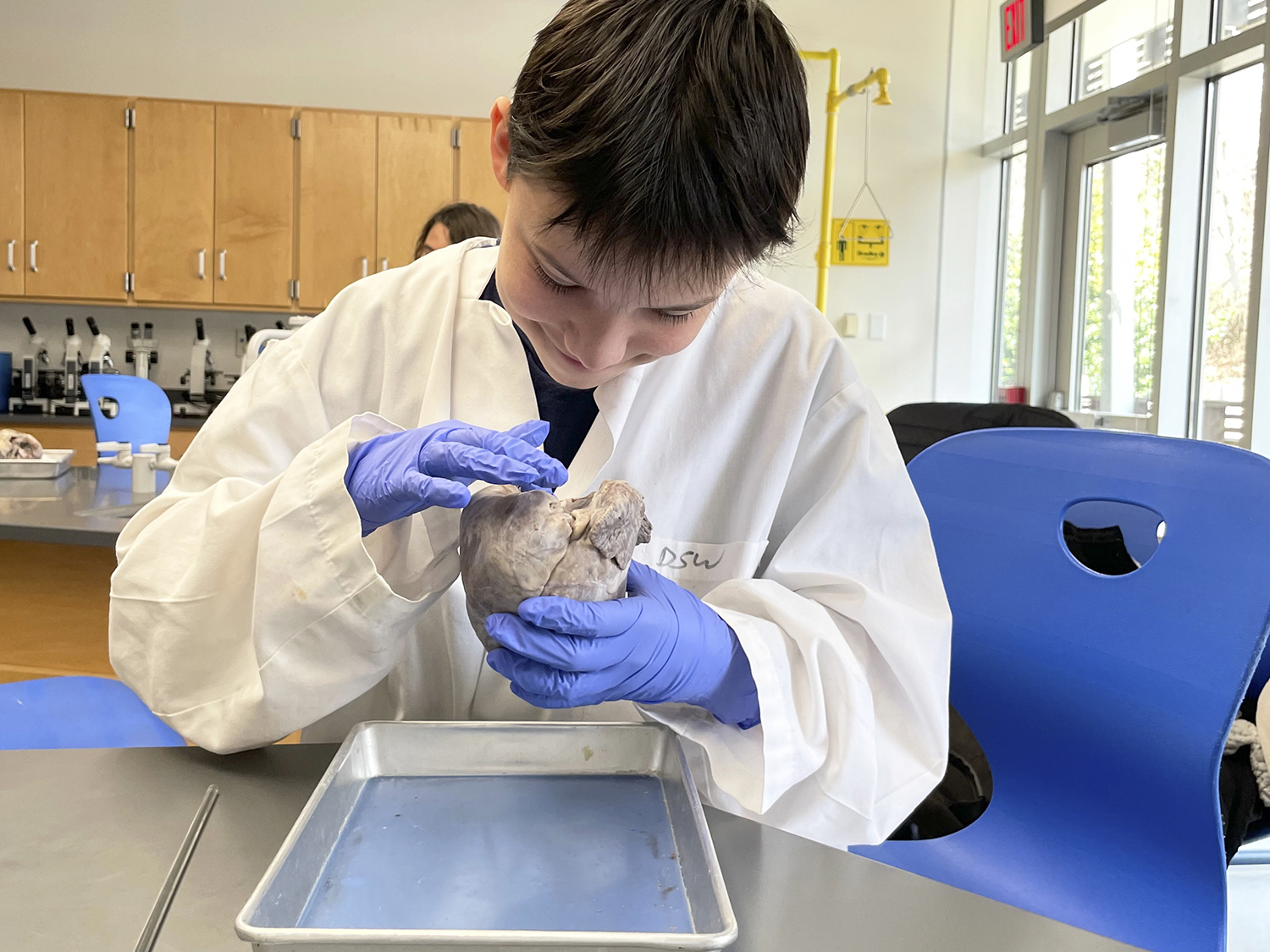
A week later we took another close look at the animal hearts and each team evaluated their work and discussed what could be improved next time. Then we had to throw away the hearts (What else could we do with almost twenty labeled hearts?).
In conclusion, we found that it was a really fun, interesting and very hands-on project. We learned a lot and felt like real biologists!
Louis R. and Emil F. (8th grade)