From the Low Country to DNA Research – A Fascinating Look at an Extraordinary Life Path
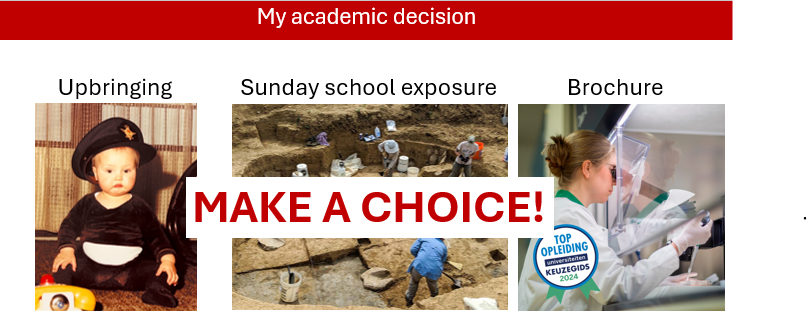
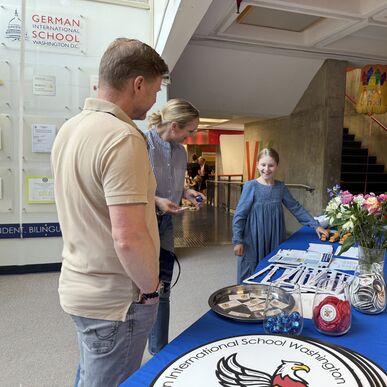
On January 12, we welcomed Dr. Daniël P. Melters to our school, where he introduced us in a guest lecture to the fascinating world of DNA. We also heard his remarkable life story and how, starting from a small town in the Netherlands and taking many detours along the way, he eventually became a scientist working in the United States.
Today, Dr. Melters works at the National Cancer Institute, where his research focuses on how chromatin regulates cell division. To make this complex topic easier to understand, he began by explaining the so-called central dogma of molecular biology which states that once information has been translated into a protein, it cannot be transferred back. This principle also applies to the production of DNA: first, DNA is transcribed into RNA, and then RNA is translated into proteins, which in turn play a role in the formation of new DNA.
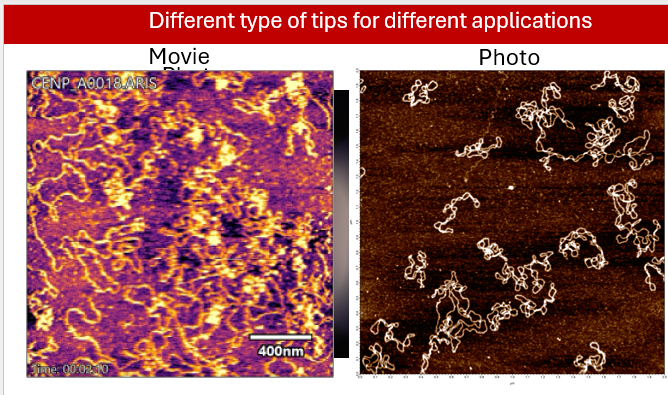
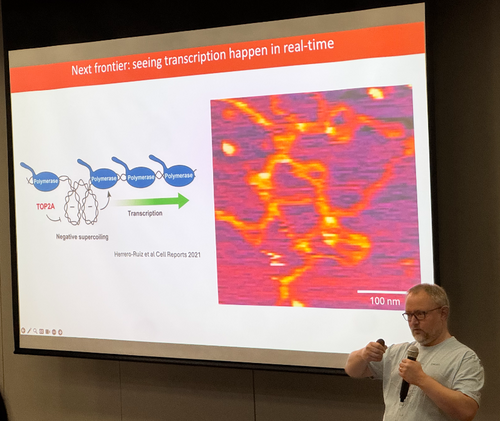
What made the lecture particularly exciting was that we did not learn about these processes only in theory: Dr. Melters explained that they can even be visualized in three dimensions using a special microscope called an AFM (Atomic Force Microscope). At the same time, he made it clear that even the most advanced technology has its limits and cannot capture everything - a point he illustrated with the image of a hamster running through a maze and occasionally disappearing from view.
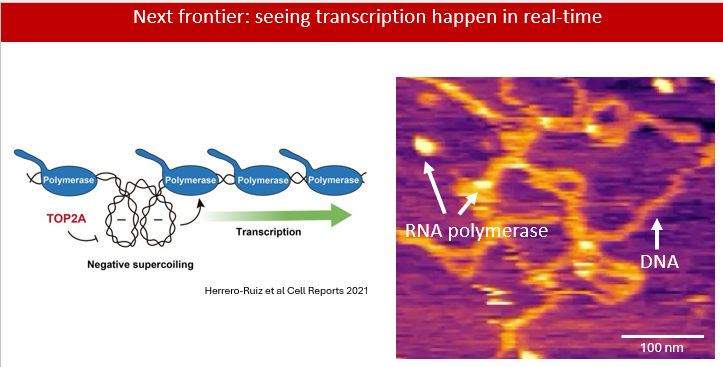
We also learned that DNA is produced with the help of an enzyme called polymerase. This enzyme not only builds the DNA strand but also twists it at the same time, a process known as “supercoiling.” At the end of the talk, Dr. Melters presented several open research questions that scientists are still investigating today, such as how many RNA molecules a single polymerase can produce and how often so-called supercoil loops form and how long they last. Answering these questions is essential for understanding how genes in our cells are activated or suppressed.
Personally, I found the lecture very interesting and easy to follow. Although we have not yet covered much about DNA and enzymes in class, Dr. Melters explained these complex topics so clearly that I was able to understand them well. I also found his personal insights into his academic and career choices very helpful. However, what fascinated me the most was one astonishing fact: if all the DNA strands in our bodies were laid end to end, they would stretch to the Moon and back about 150,000 times.
Maika L. (11th grade)